Well all-righty then the conference is over and I have had a couple of days to digest all the things I saw and learned. The venue was awesome, Santa Barbara breathtaking, and the salmonid restoration federation (SRF) did an outstanding job with organization, breadth of presenters, and even the food/coffee/snacks offered up, including a lunch, exceeded expectations. I do intend to get to the talks I saw on Friday and Saturday but today I want to finish up on the beaver/salmonid workshop and field tour because, you know, beaver... and salmon.
Historic and Current Distribution of Beaver In CA. CDFW Lanman et al
But first a couple of thing with regards to the blog. Coincident with the recent publication by CA fish and wildlife paper Lanman et al documenting the historic occurrence of beaver though out the majority of California and the conference on beaver/salmonids my little blog has seen a slight uptick of visits. Granted beaver in semi-arid socal is a bit of a niche blog market anyways- the average socal brah is probably ignorant on beaver in socal, or southern steelhead for that matter- it is still encouraging to see daily page visits go up from a trickle of 3 or 4 visits to getting up in the double digits on the reg. Additionally I discovered a facebook open group Beaver Management Forum where I put my posts and that has helped with attention too- make sure to join!!! And you too can help southland beaver as well simply by liking my posts on facebook- even if you don't read them haha- or sharing on on your wall it all helps.
Martinez Beavers. c/o Ted Guzzi
Now back to the beaver workshop. It was great to meet and talk to so many beaver believers (sorry Justin we are taking the name back). People like Martinez Beavers own Heidi Perryman, "Rickipedia" Rick Lanman, and the Water Institute's Kate Lundquist and Brock Dolman. I also met and had nice conversations with Eli Asarian of Riverbend Sciences/beaver mapper, Shari Witmore of NOAA, Kevin Swift of swift water design- an emerging player in California non-lethal beaver management- as well as beaver advocate and water lover- great website/blog I will put it on my blogroll Kevin!! Several people also approached me and said that they do read my blog- cool!! I was a little disappointed that I did not come across any other significant beaver advocates from the southland- it was a decidedly northern Californian lot there- but you know I just got to hold it down until the rest of the southland catches up. There were loads of people I never got a chance to talk to that I would have liked to chatted up. Sometimes a lot of social contact shuts me down or I just get too shy. Never the less it was great to see such a significant beaver coalition present and as one salmon person said to me "beaver people are taking over this convention!" Well as one prominent salmon speaker said to me, paraphrasing: "us fish people can get a little myopic in our view, we do that well." So maybe beaver hooliganism is the shot in the arm that fish people need.
Duane Nash
In my last post I wrote about the first four talks at the workshop. Here I want to talk a little about the last two talks as well as the field tour.
Kate Lundquist. Martinez Beavers c/o Ted Guzzi
Kate Lundquist of the water institute gave a speech titled Policy Opportunities for Working with Beaver in Salmonid Recovery. The emphasis of the speech was actually on policy regarding beaver. A dry topic and one not as sexy as say how beaver dams serve as incubators for coho smolt or beavers role in dryland watersheds- but actually this talk was probably the most necessary in light of how beaver can and should be treated in the future in California. Basically there is not much to protect beaver in California. You can go read the CA fish and game code here. From Nov1-Mar 31 you can go out and hunt and bag just about as many beaver as you want. Additionally if you have a "nuisance beaver" you can apply for a depredation permit at any time of year- although in most rural areas it is probably safe to assume that first step is skipped. Now this may seem a bit depressing for an animal that we are trying to promote and distribute across the state but there is a silver lining in that the laws, or lack-there-of, concerning beaver in CA, offer some avenues towards change in a positive direction.... good job Kate!!!
Mike Callahan. Martinez Beavers c/o Ted Guzzi
Next up was Mike Callahan of beaver solutions, a well known innovator on non-lethal management of beaver. He showcased some nice designs with video of flow devices that allow fish to move through a box apparatus (lower flows) and then into the pipe itself and through the dam. Cool stuff and great to see this innovative design. Flew in from Massachusetts- what a rock star!!!
After lunch we headed off in caravan of jeeps and truck into the Santa Barbara back country for the Santa Ynez beaver tour. The Santa Ynez river is roughly cut in half by Cachuma dam which disrupts steelhead migration into the majority of tributaries and also inhibits the high velocity flows that would characterize this river system. And these two modifications are important to keep in mind. Tim Robinson, who has to balance the needs of fish, citizen water, and downstream water rights, often times is in, shall we say, a bit of a pickle. You see since the majority of good spawning tributaries are cut off by the dam the Cachuma board tries to maintain a nearby tributary and parts of the main channel with year round flows of, if I recall 2.5 cubic feet/second as a compromise to the loss of great steelhead habitat upriver from the dam. Which is a bit funny because, generally speaking, steelhead don't really use the main channel for spawning but as a "highway" to get to the cooler, smaller mountain streams with good gravels. So when beaver dams cause fines to build up, or water does not get to where it needs to go fast enough, or bass, bullfrogs, catfish, and carp proliferate, or flows can not be released to mimic natural flood conditions and blow out dams for water/fish movement guess who gets the blame? Yeah Tim is not as happy with beaver as many who see the benefits of beaver in less modified habits are but Tim has a definite mandate- and that mandate is for the benefit of steelhead and downstream water rights- not beavers. But all the negatives attributed to beavers in this watershed are, if looked at closely, a corollary of the inherent anthropogenic modifications to the system.
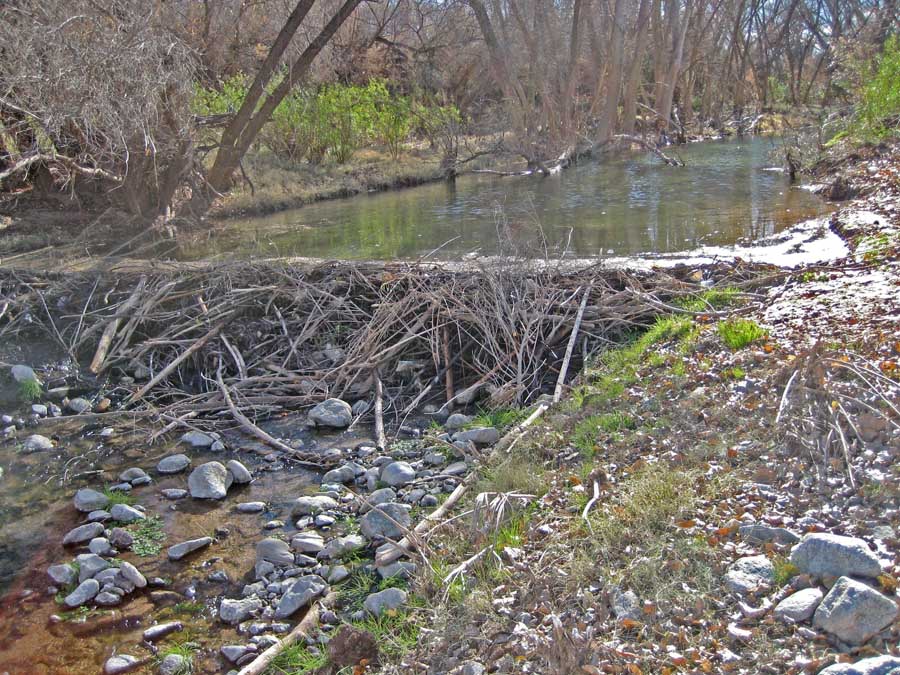
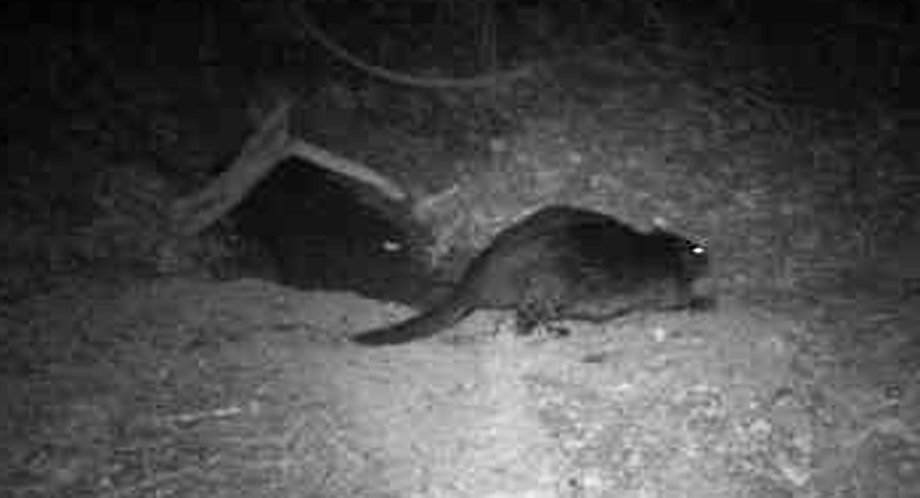
The above video is from a beaver dam south of the 154 bridge (so it does not get guaranteed year round flows) and directly upriver from the Encantado pool, a pool which becomes a veritable fish haven and sometimes killing grounds during the dry. Tim's speech and the questions are very pertinent and summarize a lot of the issues surrounding this intriguing watershed. As I mentioned to Rick Lanman later, Santa Barbara needs and can probably afford (hello SB county resident Ophrah) a desalinization plant. You may notice the dour look and vibe of many of the people. The water is low and warm. Not good trout habitat. If alluvial groundwater is not exchanging with beaver ponds due to lack of scouring flows or because of too much groundwater pumping- hyporheic exchange, where cooler subsurface flows intermingle with surface flows, one of the best attributes of beaver ponds - may not be occurring to the extent we should want. But I would not be so quick to assume this drought, and the low flows on the Santa Ynez spell doom for these beavers. Because they have lived here for 80 plus years since reintroduction. Because they live in much warmer/drier climes such as in the Mojave river and San Pedro river in Arizona. Because as I have had to correct several "trained" biologists (even at the conference) beaver do not eat fish, are amphibious but do not need to be immersed in water to live. Just look at these pics I stole from a site about the wildlife of the San Pedro river in Arizona. Read the account here.
Evidently a pair of beavers moved into a stretch of the middle San Pedro that usually flows underground, built a burrow, dug a canal for water, and then went about their business building a dam for flows that were not even there yet!!
Downstream from den
Bank burrow to the left with dug out canal. Pretty much just for drinking water?
Another view into the bank burrow
But they start making a home anyways...
And when the flows returned they had this!!!
San Pedro Beavers. like bandits in the night
Unfortunately, due to time constraints we did not visit the Alisail bridge stop in Solvang. But if you want to see what the beaver are doing there, during high flows from water release I assume check out my post Beaver Safari on the Santa Ynez River from September 2013. I did notice a lot of the dams have that u-shaped berm to them that was commented upon in the video. Also in that section I noticed a lot of the dams only corralled a little side channel of the river- not the whole river.
So don't cry for the beavers of the Santa Ynez, they will get through this. However the steelhead, not so rosy looking for them...
Tim took us to a tributary of the Santa Ynez, Salsipuedes creek- which basically means "get out if you can!" referring to the heavy floods and scouring flows that pummel this creek and incise the banks. It is one of the best remaining steelhead creeks and we saw several fish passages installed. One of which, you can see in the clip below, is often times filled in by a beaver dam. Through no fault of its own, the beaver hears flowing water and sees a great spot to make a dam on a human-modified substrate and conflicts occur. Again, if team human was not perturbing the system there would be no need for a fish passage up a concrete rampart and therefore no need to demolish the beaver dam. Oh team human, why can't you play fair?
I want to share some photos of stream I took recently. The photos are of the Portrero John Creek located in the Sespe wilderness of the Los Padres National Forest. Although the larger stream it flows into the Sespe is actually fairly dry in several areas this time of year the Portrero John Creek maintains consistent flows, even during the persistent drought we are experiencing in California. The Sespe watershed, as I have discussed before may have served as one of the last refugia of native goldern beavers in southern California prior to their extirpation. Reintroduction of beaver into such creeks makes a lot of sense in my opinion. You will notice good riparian vegetation- willows, cottonwood - and year round flow- thats all a beaver needs. In addition to the sometimes ephemeral flows in these mountains there are also abundant predators - cougars, black bears, coyotes, bobcats - that offer much challenge in terms of establishing populations. Also keep in mind the creek is at several thousand feet of elevation and the area is often snow covered this time of year- but it has been a warm, dry winter so far in socal.
Also if there are any botanical people out there let me know what this plant I kept finding under oaks and pines is. I think it might be a spikemoss but I can't find any pics of types that look like it found in these parts of the Transverse Range.
And finally an awesome video by cal-trout about the challenges facing steelhead restoration with beautiful clips of several southern Californian streams and rivers. Enjoy.
Looks like a nice little meandering river, no? Nice riparian vegetation- loads of willows, cottonwoods, sycamores- good flow for a southern Californian stream deep into the fall before any rains have commenced. Surely such an inviting scene is miles away from the machinations of modern man. But that little road way may tip you off otherwise...
What you are looking at is a section of Conejo creek downstream from the Hill Canyon Wastewater Treatment Plant of Thousand Oaks. Of course I have mentioned this watershed before. Conejo creek has received some press recently due to the revelation that the federally protected southern steelhead has begun to recolonize these waters. The cities of Thousand Oaks and Camarillo both discharge treated wastewater into the creek. And in light of the fish's presence in the creek both municipalities may now be required to sustain these discharges in order to maintain the habitat. And this is much to the ire of at least Camarillo, because that city had begun construction of a pipeline to use their reclaimed water for agriculture (probably sod farms as I don't think reclaimed water can be used for food crops).
And this whole debate is one which we have visited upon before: In a landscape that has historically been robbed of water flow through dams and diversions, is it now our obligation to recoup some of the losses by taking advantage of outflow from wastewater treatment plants? I know it is not a pleasant thought, concentrating wildlife restoration efforts in essentially treated sewage. But as I said before, in a water parched landscape, beggars can't be choosers. And ultimately, it is not our choice to make- wildlife is already making the choice to live in habitats made possible through reclaimed water discharge- such as the steelhead recolonizing Conejo creek or the waterfowl I photographed in some of the tanks for the treatment facility in the picture below.
And I mean, it really is a nice looking stream when you get over the "treated sewage" aspect of it...
Of course all of this talk of treated effluent begs the question: should we concentrate beaver restoration in these areas in southern California? Well I would say YES! YES!! and more YES!!!
But let me buffer my argument more with this line of reasoning. To reestablish beaver they need to get over the predator hump. MartinezBeavers talked about this issue recently here. While beaver have been extirpated from many parts of their former range, their natural predators-cougars, bobcats, coyotes, bears, wolves- have done quite nicely in the meantime. Jeff Baldwin of Sonoma State addresses this very real issue of the problem of beaver reintroduction in predator saturated lands. It becomes less to do with stream slope gradient/vegetation type and more to do with how will this beaver transplant survive in small streams before it can build dams to survive predation? There is a real potential for loss in restoration efforts especially in arid lands with small streams and abundant predators. So the real question becomes how do we maximize our chances of successfully reintroducing beaver into these lands? Well we need to look at beaver restoration as essentially a war- there will be heavy casualties beavers will absorb, no doubt about it, from people and predators.
Okinawa beachhead. 1945. wiki
But if we utilize the areas of deepest water and highest flow- often man made reservoirs, dams, and water reclamation outflows- we will stand the greatest chance of establishing beachheads. And from these beachheads beaver can then spread across the whole watershed.
N. Matijilla Creek. Los Padres Wilderness
Middle Lions Camp. Sespe Wilderness
Above are two places I would love to see beaver reintroduced. The north fork of Matijilla creek is a tributary of the Ventura river and still has steelhead while Middle Lions camp also has a stream in it with steelhead. In the case of Lions camp I have it on good record that an acquaintance of mine, Tim Peddicord a retired biology teacher, spotted a beaver there in the 1960's. Additionally numerous other anecdotal reports of beaver in the Sespe watershed suggest that this area was a final stronghold for beaver in southern California.
However the Sespe wilds might not be the ideal spot to reintroduce beaver initially, as appealing as it may seem. That name, Lions camp, is no joke- there are lots of cougars out there, and bear, and coyote, and bobcat. The flows might be low or the pools just not deep enough to establish beaver in high enough densities to get over the predator hump out in the Sespe.
But how about a place like this:
Santa Clara River Estuary
Although the lower Santa Clara river runs dry due to the Freeman Diversion the estuary forms a veritable lake due to discharge from the Ventura wastewater treatment plant. Dense beds of tules and acres of willow thickets would be ideal forage. No cougars or bears here. Establishing a viable population would be possible and from here intrepid beavers could spread up into the entire watershed or be transplanted by humans to other areas in the watershed.
We just have to get over the "icky" reaction to treated wastewater- the wildlife already has.